


1. With a pitch, first check what the displayed rate includes
Pitch pricing is not structured the same way everywhere. Some tariffs already include two guests, electricity and water, while others calculate the plot and guests separately. Campsites may also have different categories based on size, position and facilities.
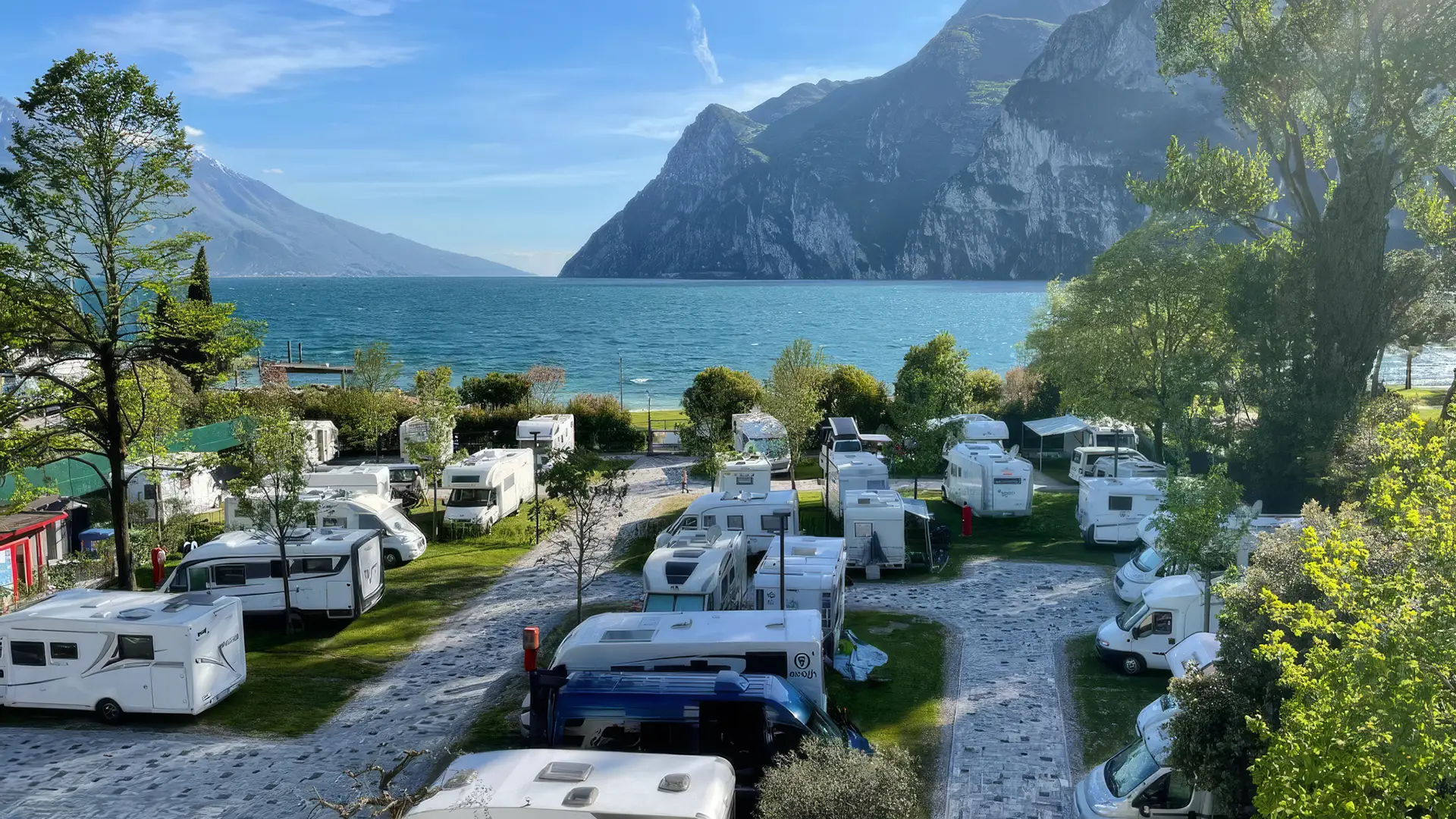
A useful current example is Camping Europa Silvella. During specified periods in 2026, its CampingCard ACSI offer lists a Category A pitch at 27 euros per night, including two adults, one dog, electricity and drinking water; tourist tax is extra. Seven nights therefore equal 189 euros in this specific promotional model, plus tax and any additional extras. This is an offer example, not an average Lake Garda camping price.
2. Shoulder season can offer much better value
The travel period is one of the strongest price levers. In addition to lower seasonal rates, promotions and camping-card offers are common outside the main holiday weeks. Europa Silvella lists the 27-euro rate in 2026 for parts of spring, a June/July period and again from late August.
Rental accommodation can have separate promotions. Camping Bella Italia, for example, advertises a 7=6 offer during selected weeks in June and September 2026 for specified rental accommodation; pitches are excluded from that particular promotion. Never assume that an advertised discount applies to every accommodation type.
3. For a mobile home, compare the total price of the exact category
Mobile homes are not usefully compared through one “camping price per person”. Size, number of bedrooms and bathrooms, air conditioning, terrace, location within the resort and travel period all influence the price. During school-holiday periods there may also be minimum stays or fixed arrival and departure days.
Check what is included in the unit. Linen, towels and final cleaning can be included, optional or compulsory extras. At La Quercia, for example, final cleaning is included for stays longer than three nights, while stays of one or two nights currently carry a 50-euro surcharge. Certain pet-friendly maxi caravans also have an additional cleaning charge.
4. Tourist tax is not uniform around Lake Garda
Tourist tax is not one single “Lake Garda tax”. It depends on the municipality or region and the accommodation category, so it should be budgeted separately and checked again before travel.
Current examples show the variation: in Garda Trentino, campsites are charged 1.50 euros per person per night for a maximum of ten nights, with children under 14 exempt. Camping Eden in San Felice del Benaco states 1.00 euro per person per day for its category and exempts children up to age 14. La Quercia in Lazise currently lists 1.30 euros per day for guests over 14.
These figures are current examples, not a permanent table for the whole lake. Municipalities can change rates and exemptions.
5. Extras can change an apparently cheap offer
Rental accommodation in particular deserves a look beyond the headline price. Camping Eden, for example, currently lists optional bed linen at 10 euros for a single-bed set and 15 euros for a double-bed set. La Quercia lists dogs, private bathrooms, extra vehicles, moorings and trailer parking among services that may be charged separately.
Do not automatically treat a security deposit or advance payment as part of the holiday cost. A refundable security deposit affects your cash requirement at check-in but is not part of the final accommodation price if returned. An advance payment normally reduces the remaining balance rather than increasing the total.
6. For families, “price per night” is especially misleading
With two adults and two children, age limits, included guests and child rates can change the total considerably. A mobile home priced for the complete unit may offer good value when well occupied, while a pitch can add guests separately. Conversely, your own caravan or motorhome is often the lower-cost accommodation choice outside peak season.
Always enter the real family configuration in the booking system. A two-adult rate cannot be reliably multiplied for four or five people when the campsite's pricing logic is unknown.
7. How to compare two offers fairly
- Same dates: a difference of one week can change rates and minimum stays.
- Same occupancy: enter adults, children's ages and pets completely.
- Same category: do not compare a standard pitch with front row, or a base mobile home with a premium model.
- Add compulsory charges: include tourist tax, mandatory cleaning and other required fees.
- Separate optional extras: add linen, second vehicle, private bathroom or mooring only when you actually need them.
- Check inclusions: electricity, water, Wi-Fi, pool access, parking or air conditioning may be included or separate.
- Value cancellation terms: the cheapest non-refundable rate is not automatically the best financial choice.
8. Where is it easiest to save?
The biggest lever is usually the travel period. If you can avoid the main school-holiday weeks, compare June and September and, depending on the weather you want, other shoulder-season dates. Flexibility on category also helps: a good pitch away from the front row may be much better value if you plan to spend most days exploring.
Check official promotions and, if you are eligible, camping-card tariffs. The final price remains what matters: a discount is only good value when the required facilities are included and the conditions fit your trip.
